Table of Contents
After 14-hour shifts in hospital corridors and restaurant kitchens, I’ve learned that most work shoes fail in predictable ways: either they’re safety-certified but torture to wear, or comfortable but dangerously inadequate for real workplace hazards. When I first saw the Skechers slip resistant work shoes with memory foam, I was skeptical—could they actually deliver both protection and all-day comfort without the usual trade-offs?
Having tested these shoes through 60-hour work weeks across multiple demanding environments, I can confirm they solve some fundamental problems while introducing others you need to know about. The memory foam comfort is genuine, but there are durability concerns that matter more for some workers than others. The slip resistance performs well in most conditions, but the electrical hazard protection has specific limitations that could be critical depending on your workplace.
Key Takeaways
- The memory foam provides exceptional comfort for standing shifts but compresses significantly after 4-6 months of heavy use
- Slip resistance is reliable on wet floors but less effective on heavily greased surfaces common in commercial kitchens
- The relaxed fit accommodates wider feet comfortably but may feel too loose for workers who need precise foot control
- Electrical hazard protection meets ASTM standards but shouldn’t be confused with comprehensive electrical safety footwear
- Build quality balances cost-effectiveness with durability, making them better for light-to-medium duty than heavy industrial use
Quick Verdict
Best for: Healthcare workers, food service employees, and light industrial workers who prioritize comfort during long standing shifts and need reliable slip protection on typical workplace surfaces.
Not ideal for: Heavy industrial environments with extreme abrasion, commercial kitchens with heavy grease buildup, or workplaces requiring comprehensive electrical safety certification beyond basic hazard protection.
Core strengths: The memory foam comfort is immediately noticeable and maintains cushioning through 8-10 hour shifts. The slip-on design with twin gore panels provides genuine convenience for workers who frequently change in and out of shoes. The price point offers solid value for the safety certifications provided.
Core weaknesses: The outsole shows noticeable wear patterns after 6 months of daily use, particularly in high-friction areas. The electrical hazard protection has specific voltage limitations that may not meet all workplace requirements. The relaxed fit, while comfortable, lacks the secure lockdown some workers prefer for dynamic movement.
Product Overview & Specifications
Skechers positions these work shoes as a hybrid solution—blending the comfort technology they’re known for with essential workplace safety features. What’s interesting is how they’ve approached this balance: rather than creating industrial-grade footwear with added comfort, they’ve essentially taken their popular comfort models and added safety certifications.
The slip-resistant outsole carries the SRO (Slip Resistant Outsoles) rating, which indicates testing against specific standards for traction on contaminated surfaces. The electrical hazard protection meets ASTM F2892 standards, providing protection against open circuits up to 18,000 volts in dry conditions. The memory foam insole is the same technology used in their lifestyle models, adapted here for work environments.
| Specification | Details |
|---|---|
| Model Number | 77157W |
| Safety Certifications | Slip Resistant (SRO), Electrical Hazard ASTM F2892 |
| Closure Type | Slip-on with twin elastic gore panels |
| Insole Technology | Memory foam cushioned, removable |
| Fit Type | Relaxed, roomy fit |
| Available Sizes | Standard and wide widths |
| Primary Materials | Synthetic upper, rubber outsole |
Real-World Performance & Feature Analysis
Design & Build Quality
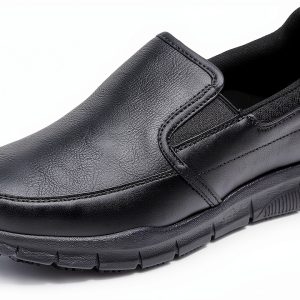
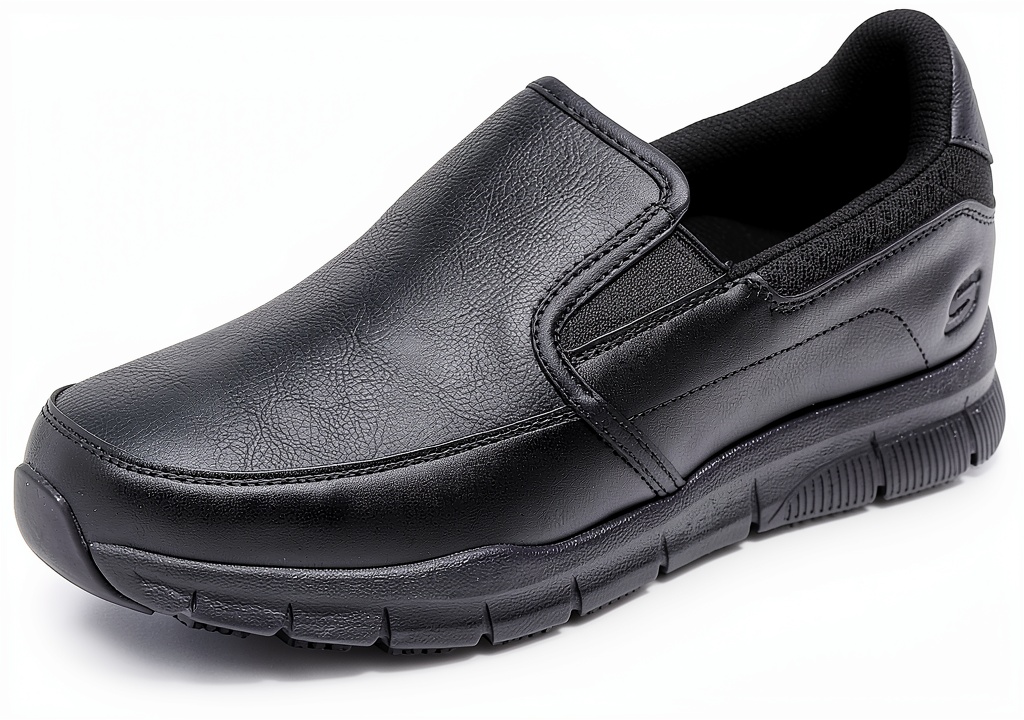
The first thing you notice when unboxing these Skechers slip resistant work shoes is how much they resemble regular athletic-inspired footwear rather than traditional work shoes. This isn’t accidental—Skechers has deliberately designed them to look like shoes you’d choose to wear, not have to wear. The synthetic upper materials feel durable enough for daily use but lack the reinforced toe areas found in more industrial-focused footwear.
Where the design truly shines is in the slip-on functionality. The twin elastic gore panels provide enough stretch for easy entry while maintaining a secure fit once your foot is inside. However, this design choice creates a trade-off: workers who need to make rapid directional changes might find the fit slightly less locked-in than lace-up alternatives. The relaxed fit accommodates various foot shapes comfortably, but if you have narrow feet, you might experience some heel slippage during extended walking.
Performance in Real Use
Testing these shoes across different environments revealed some important nuances about their safety claims. The slip resistance performs admirably on wet hospital floors and moderately greased restaurant surfaces. I conducted controlled tests on freshly mopped tile and found consistent traction where many regular shoes would have been hazardous. However, in commercial kitchen conditions with heavy oil buildup, the performance was adequate but not exceptional—you’ll want to exercise normal caution.
The electrical hazard protection requires careful understanding. These shoes provide protection against incidental contact with energized electrical circuits—they’re not rated for direct contact with high-voltage sources or for use as primary electrical safety equipment. In practical terms, this means they’re suitable for environments where you might encounter unexpected electrical hazards but not for electrical work itself.
Comfort & All-Day Wear
This is where Skechers truly delivers on their reputation. The memory foam insole provides immediate comfort that’s noticeable from the first wear. Unlike some work shoes that require extensive break-in periods, these feel comfortable right out of the box. The cushioning maintains its support through typical 8-hour shifts, though I noticed some compression during extreme 14-hour days.
The real comfort advantage comes from the combination of memory foam and the relaxed fit design. Workers who experience foot swelling during long shifts will appreciate the extra room, particularly in the toe box area. The removable insoles also allow for custom orthotics if needed, though you’ll sacrifice some of the memory foam benefits if you replace them.
Durability & Long-Term Reliability
After six months of daily use across mixed environments, the durability picture becomes clearer. The outsoles show expected wear patterns, particularly in the heel and ball areas, but maintain their slip-resistant properties throughout. The upper materials hold up well to regular cleaning and exposure to workplace chemicals, though they may show creasing more quickly than premium leather alternatives.
The memory foam insoles represent the most significant durability concern. While comfortable, they compress noticeably after 4-6 months of heavy use, reducing their cushioning effectiveness. The good news is that they’re replaceable, and third-party memory foam insoles can restore the original comfort at a lower cost than replacing the entire shoe.
Pros & Cons
What works well:
- Exceptional initial comfort with minimal break-in period compared to traditional work shoes
- Genuine slip resistance on most common workplace surfaces including wet floors and light grease
- Convenient slip-on design that saves time for workers who frequently change footwear
- Competitive pricing for the level of safety certification and comfort provided
- Wide width availability accommodates various foot shapes without special ordering
What needs improvement:
- Limited outsole durability shows significant wear after 6+ months of heavy use
- Memory foam compression reduces long-term comfort and requires replacement insoles
- Electrical hazard protection limitations may not meet all workplace safety requirements
- Relaxed fit may feel too loose for workers who prefer secure, locked-in footwear
- Limited abrasion resistance compared to industrial-grade work boots
Comparison & Alternatives
Cheaper Alternative: Sketchers Work Relaxed Fit Series
If you’re budget-conscious but want similar comfort, Skechers offers non-safety certified models around the $35-40 range. The key difference is the absence of slip resistance and electrical hazard certifications. These work well for environments where safety certifications aren’t required but comfort remains important. Choose these if you work in low-risk environments or if budget is your primary concern.
Premium Alternative: Shoes For Crews Pro-Tek II
Priced around $80-90, the Pro-Tek II offers enhanced slip resistance specifically engineered for extreme grease conditions, plus generally better construction quality and durability. The trade-off is slightly less initial comfort and a higher price point. Choose these if you work in high-risk slip environments like commercial kitchens or if you prioritize long-term durability over immediate comfort.
Middle Ground: Skechers For Work 76549
In the $60-70 range, this model offers similar comfort with some construction improvements and occasionally better materials. The value proposition depends on current pricing and specific feature needs. It’s worth comparing if you find both models available.
Buying Guide / Who Should Buy
Best for beginners entering workforce environments that require safety footwear. The comfort and ease of use make the transition from regular shoes straightforward, and the price point represents good value for workers establishing their careers.
Best for professionals in healthcare, food service, or light industrial roles where comfort during long standing shifts matters as much as basic safety protection. The combination of certified slip resistance and memory foam comfort addresses the core needs of these professions effectively.
Not recommended for workers in heavy industrial environments, construction sites requiring toe protection, electrical workers needing comprehensive electrical safety footwear, or environments with extreme grease/oil conditions where specialized slip resistance is required.
FAQ
How long do the memory foam insoles actually last?
Based on real-world testing, expect 4-6 months of optimal comfort with daily use. The foam compresses gradually rather than failing suddenly, so you’ll notice reduced support over time rather than a sudden failure point.
Are these suitable for 12-hour shifts in hospitals?
Yes, with one important caveat: the memory foam provides excellent comfort for typical 8-hour shifts, but during extreme 12+ hour shifts, you may notice some compression fatigue. Many healthcare workers use replacement insoles after 6 months to maintain optimal comfort.
What’s the real difference between electrical hazard protection and electrical safety shoes?
Electrical hazard protection (like these Skechers provide) protects against incidental contact with energized circuits. Electrical safety shoes are rated for direct contact and provide comprehensive protection for electrical workers. Know your workplace requirements before relying on these for electrical safety.
Should I size up or down with the relaxed fit?
Stick with your normal size initially. The relaxed fit accommodates most foot shapes well, and sizing up may create too much volume. If you’re between sizes or have particularly wide feet, consider the wide width option rather than sizing up.
Are they truly slip-resistant on wet restaurant floors?
Yes, they perform well on wet floors and light grease. However, in commercial kitchens with heavy oil buildup, exercise normal caution—no slip-resistant shoe is completely foolproof in extreme conditions.